Java Yahtzee
Java Yahtzee
Research
Research
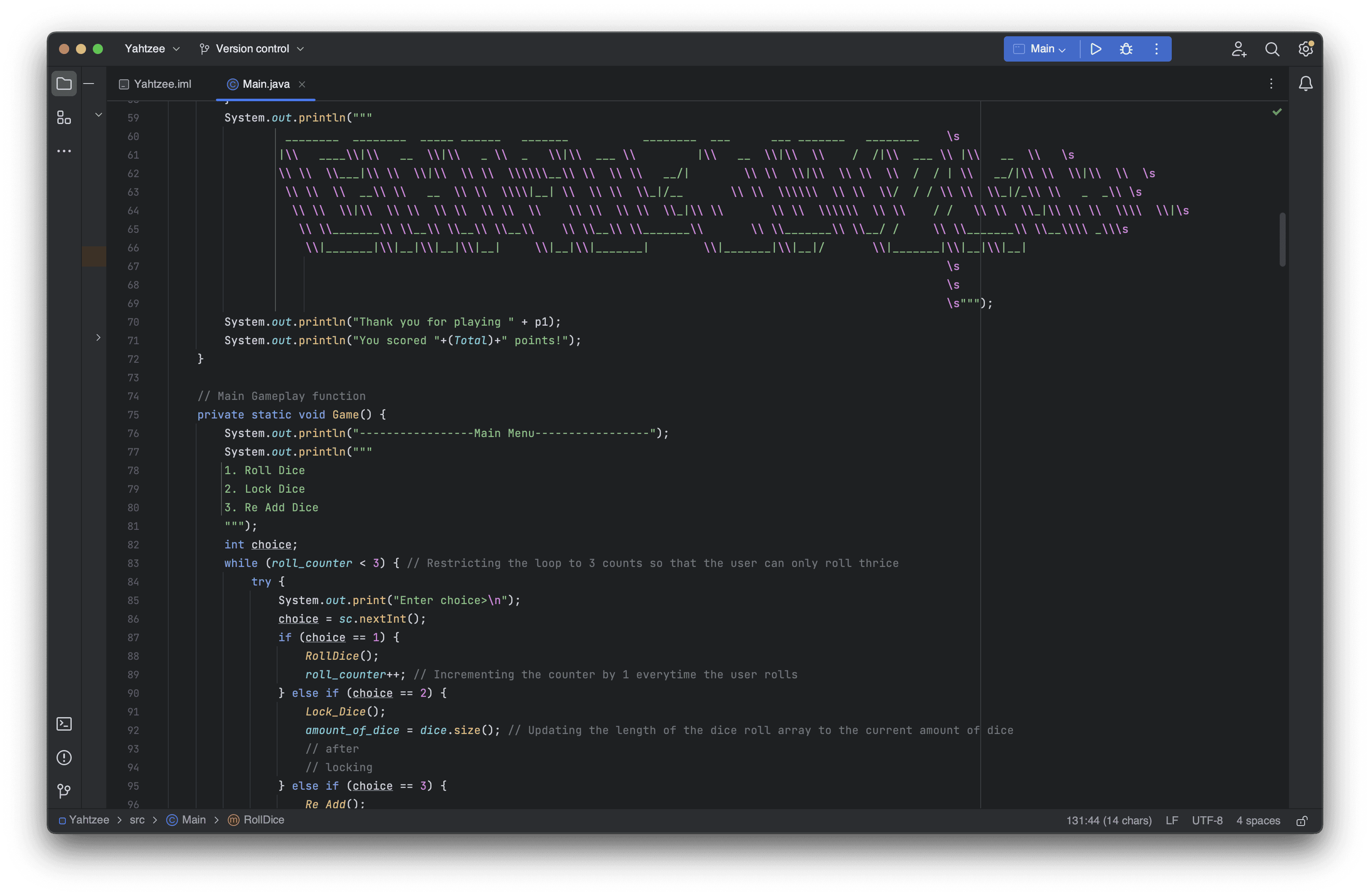
The Java Yahtzee project aimed to implement a digital version of the popular dice game while adhering to the Scrum Software Development Life Cycle (SDLC). The research phase included:
Understanding Game Mechanics:
Studied the rules and scoring system of Yahtzee, including categories like Full House, Small Straight, and Yahtzee.
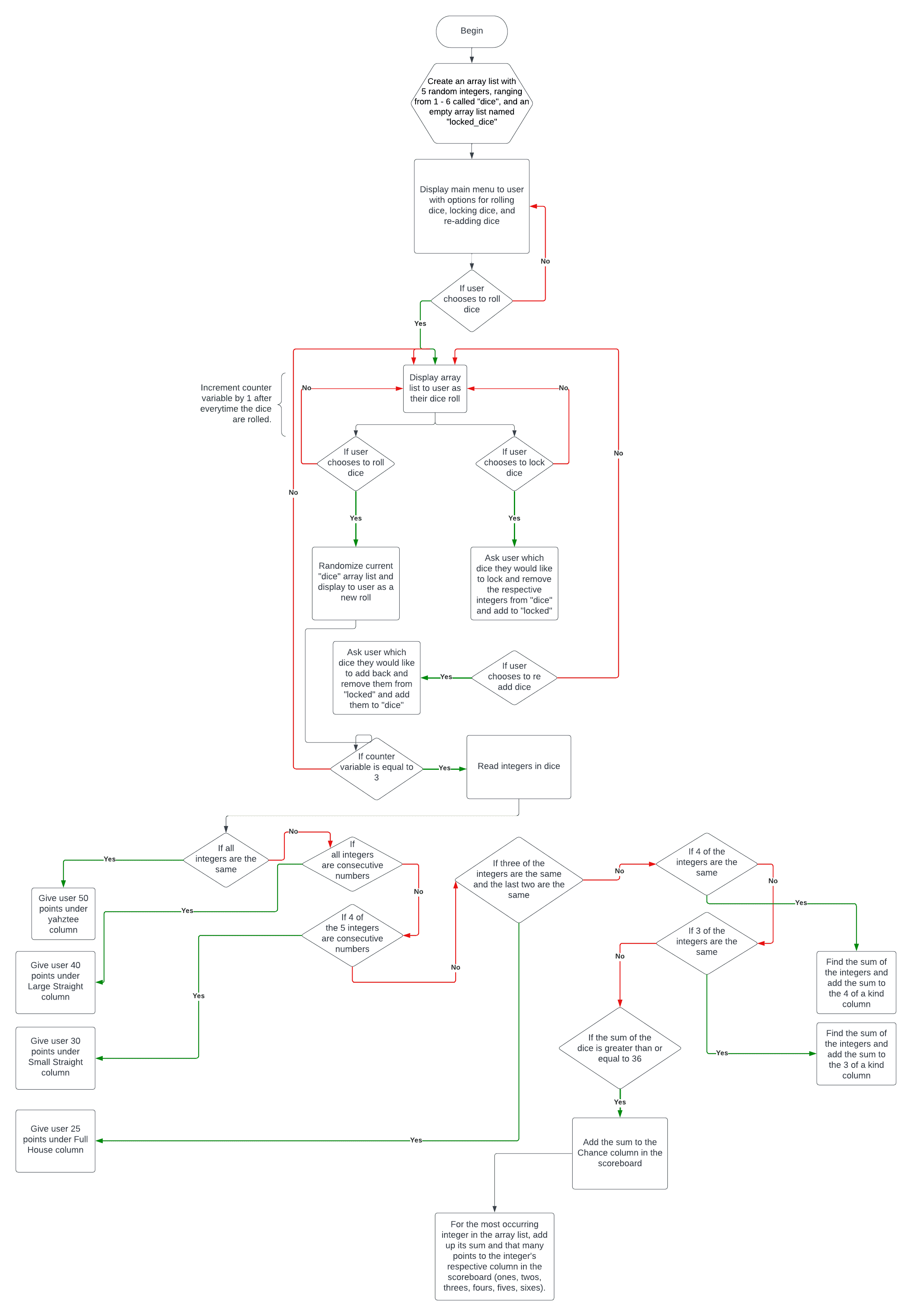
Analyzed gameplay flow: rolling dice, locking dice, and calculating scores.
User Experience Requirements:
Defined clear objectives for an intuitive interface with options like rolling dice, locking dice, and viewing scores.
Planned to provide feedback for user inputs and track scores seamlessly.
Software Tools:
Selected Java for its flexibility and robustness in handling logic and user interaction.
Decided on a console-based interface to simplify implementation and focus on game logic.
Team Collaboration:
Leveraged Scrum methodologies to divide work among team members and ensure iterative progress through planning, coding, and testing phases.
The Java Yahtzee project aimed to implement a digital version of the popular dice game while adhering to the Scrum Software Development Life Cycle (SDLC). The research phase included:
Understanding Game Mechanics:
Studied the rules and scoring system of Yahtzee, including categories like Full House, Small Straight, and Yahtzee.
Analyzed gameplay flow: rolling dice, locking dice, and calculating scores.
User Experience Requirements:
Defined clear objectives for an intuitive interface with options like rolling dice, locking dice, and viewing scores.
Planned to provide feedback for user inputs and track scores seamlessly.
Software Tools:
Selected Java for its flexibility and robustness in handling logic and user interaction.
Decided on a console-based interface to simplify implementation and focus on game logic.
Team Collaboration:
Leveraged Scrum methodologies to divide work among team members and ensure iterative progress through planning, coding, and testing phases.
The Java Yahtzee project aimed to implement a digital version of the popular dice game while adhering to the Scrum Software Development Life Cycle (SDLC). The research phase included:
Understanding Game Mechanics:
Studied the rules and scoring system of Yahtzee, including categories like Full House, Small Straight, and Yahtzee.
Analyzed gameplay flow: rolling dice, locking dice, and calculating scores.
User Experience Requirements:
Defined clear objectives for an intuitive interface with options like rolling dice, locking dice, and viewing scores.
Planned to provide feedback for user inputs and track scores seamlessly.
Software Tools:
Selected Java for its flexibility and robustness in handling logic and user interaction.
Decided on a console-based interface to simplify implementation and focus on game logic.
Team Collaboration:
Leveraged Scrum methodologies to divide work among team members and ensure iterative progress through planning, coding, and testing phases.
Research
The Java Yahtzee project aimed to implement a digital version of the popular dice game while adhering to the Scrum Software Development Life Cycle (SDLC). The research phase included:
Understanding Game Mechanics:
Studied the rules and scoring system of Yahtzee, including categories like Full House, Small Straight, and Yahtzee.
Analyzed gameplay flow: rolling dice, locking dice, and calculating scores.
User Experience Requirements:
Defined clear objectives for an intuitive interface with options like rolling dice, locking dice, and viewing scores.
Planned to provide feedback for user inputs and track scores seamlessly.
Software Tools:
Selected Java for its flexibility and robustness in handling logic and user interaction.
Decided on a console-based interface to simplify implementation and focus on game logic.
Team Collaboration:
Leveraged Scrum methodologies to divide work among team members and ensure iterative progress through planning, coding, and testing phases.
Design
Design
The design phase focused on creating a modular, efficient, and scalable structure:
Main Menu:
Displayed key options: Roll Dice, Lock Dice, Re-add Dice, and View Scores.
Ensured intuitive navigation for players.
Game Logic:
Developed functions to roll dice, lock selected dice, and calculate scores.
Limited dice rolls to three per turn, consistent with Yahtzee rules.
Provided functions for each scoring category (e.g., Full House, Large Straight).
Scoreboard:
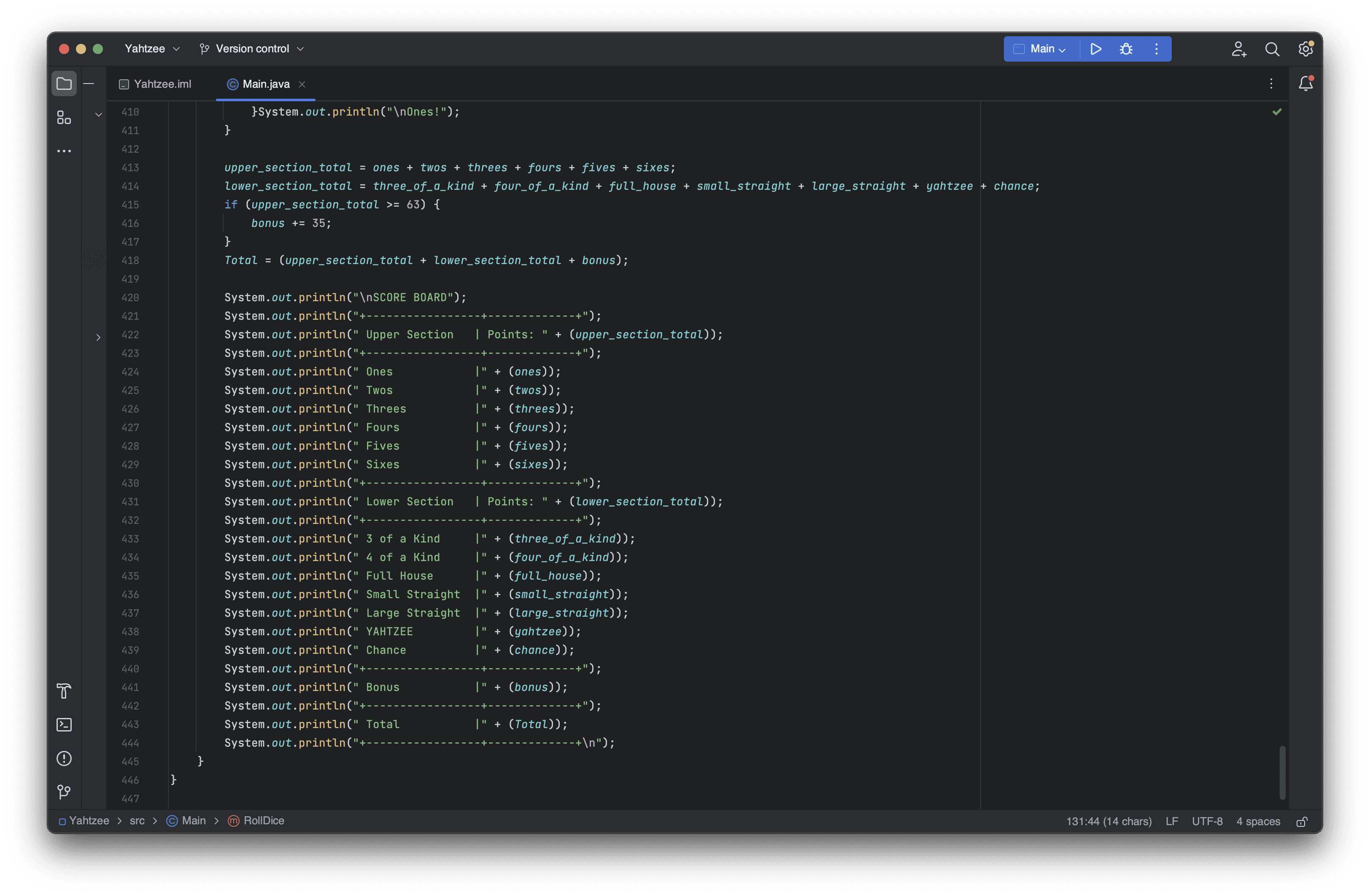
Designed a system to track and display upper and lower section scores.
Allowed seamless updates after each turn.
User Feedback:
Included prompts and outputs to guide players through actions.
Displayed dice rolls, locked dice, and remaining options dynamically.
The design phase focused on creating a modular, efficient, and scalable structure:
Main Menu:
Displayed key options: Roll Dice, Lock Dice, Re-add Dice, and View Scores.
Ensured intuitive navigation for players.
Game Logic:
Developed functions to roll dice, lock selected dice, and calculate scores.
Limited dice rolls to three per turn, consistent with Yahtzee rules.
Provided functions for each scoring category (e.g., Full House, Large Straight).
Scoreboard:
Designed a system to track and display upper and lower section scores.
Allowed seamless updates after each turn.
User Feedback:
Included prompts and outputs to guide players through actions.
Displayed dice rolls, locked dice, and remaining options dynamically.
The design phase focused on creating a modular, efficient, and scalable structure:
Main Menu:
Displayed key options: Roll Dice, Lock Dice, Re-add Dice, and View Scores.
Ensured intuitive navigation for players.
Game Logic:
Developed functions to roll dice, lock selected dice, and calculate scores.
Limited dice rolls to three per turn, consistent with Yahtzee rules.
Provided functions for each scoring category (e.g., Full House, Large Straight).
Scoreboard:
Designed a system to track and display upper and lower section scores.
Allowed seamless updates after each turn.
User Feedback:
Included prompts and outputs to guide players through actions.
Displayed dice rolls, locked dice, and remaining options dynamically.
Design
The design phase focused on creating a modular, efficient, and scalable structure:
Main Menu:
Displayed key options: Roll Dice, Lock Dice, Re-add Dice, and View Scores.
Ensured intuitive navigation for players.
Game Logic:
Developed functions to roll dice, lock selected dice, and calculate scores.
Limited dice rolls to three per turn, consistent with Yahtzee rules.
Provided functions for each scoring category (e.g., Full House, Large Straight).
Scoreboard:
Designed a system to track and display upper and lower section scores.
Allowed seamless updates after each turn.
User Feedback:
Included prompts and outputs to guide players through actions.
Displayed dice rolls, locked dice, and remaining options dynamically.
Development
Development
The development process involved coding, testing, and refining the game:
Implementation:
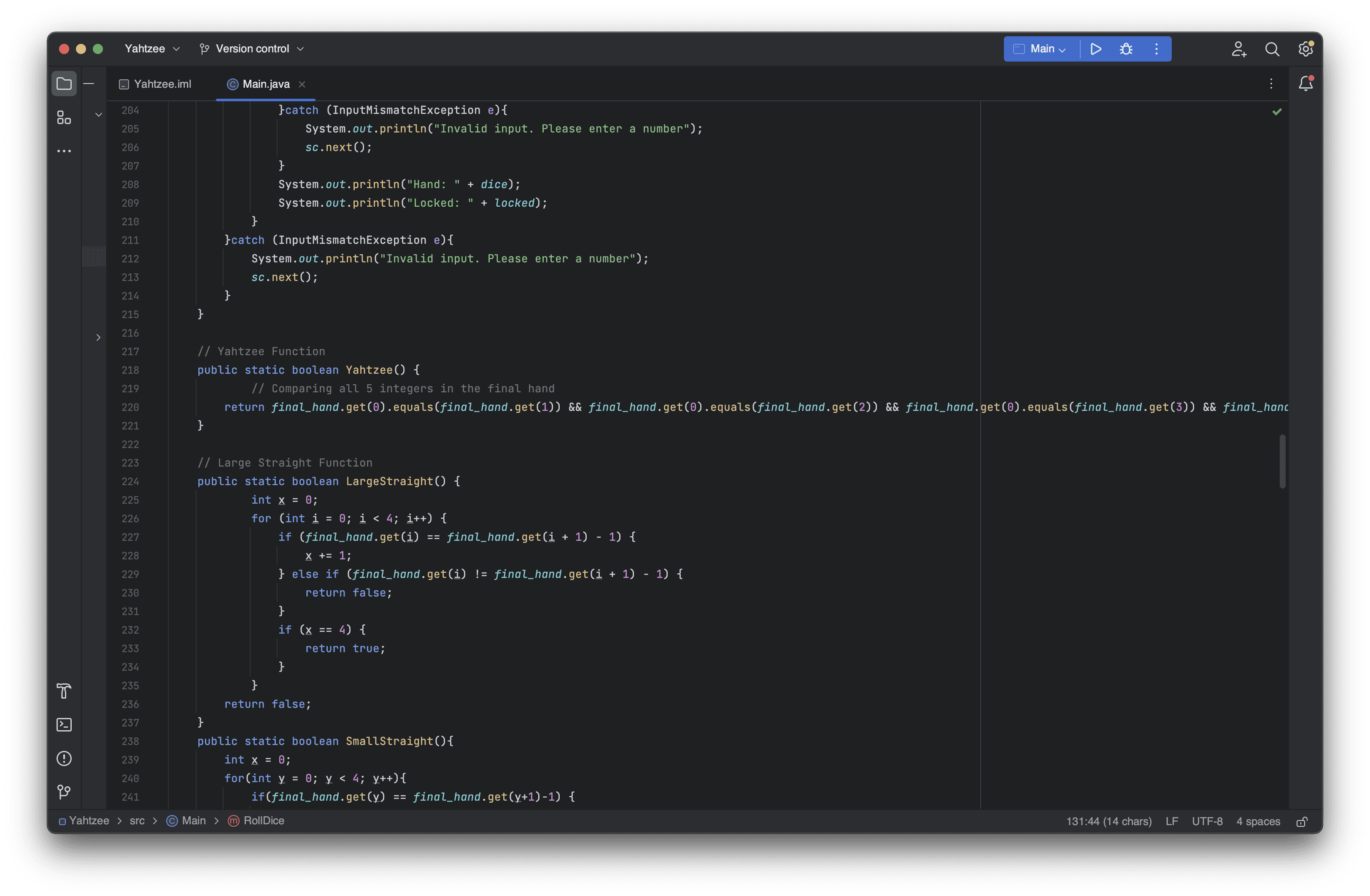
Created modular functions for core actions: rolling, locking, re-adding dice, and scoring.
Implemented a main menu system to coordinate gameplay flow.
Testing and Debugging:
Conducted extensive testing to validate dice roll randomness and scoring calculations.
Debugged edge cases, such as invalid inputs or exceeding roll limits.
Collaboration:
Distributed tasks among team members:
Example: Cole focused on upper section hand functions, Elara on straights, Madhav on rolling dice, and Oscar on re-add and chance functions.
Used iterative testing to integrate individual contributions into a cohesive game.
The development process involved coding, testing, and refining the game:
Implementation:
Created modular functions for core actions: rolling, locking, re-adding dice, and scoring.
Implemented a main menu system to coordinate gameplay flow.
Testing and Debugging:
Conducted extensive testing to validate dice roll randomness and scoring calculations.
Debugged edge cases, such as invalid inputs or exceeding roll limits.
Collaboration:
Distributed tasks among team members:
Example: Cole focused on upper section hand functions, Elara on straights, Madhav on rolling dice, and Oscar on re-add and chance functions.
Used iterative testing to integrate individual contributions into a cohesive game.
The development process involved coding, testing, and refining the game:
Implementation:
Created modular functions for core actions: rolling, locking, re-adding dice, and scoring.
Implemented a main menu system to coordinate gameplay flow.
Testing and Debugging:
Conducted extensive testing to validate dice roll randomness and scoring calculations.
Debugged edge cases, such as invalid inputs or exceeding roll limits.
Collaboration:
Distributed tasks among team members:
Example: Cole focused on upper section hand functions, Elara on straights, Madhav on rolling dice, and Oscar on re-add and chance functions.
Used iterative testing to integrate individual contributions into a cohesive game.
Development
The development process involved coding, testing, and refining the game:
Implementation:
Created modular functions for core actions: rolling, locking, re-adding dice, and scoring.
Implemented a main menu system to coordinate gameplay flow.
Testing and Debugging:
Conducted extensive testing to validate dice roll randomness and scoring calculations.
Debugged edge cases, such as invalid inputs or exceeding roll limits.
Collaboration:
Distributed tasks among team members:
Example: Cole focused on upper section hand functions, Elara on straights, Madhav on rolling dice, and Oscar on re-add and chance functions.
Used iterative testing to integrate individual contributions into a cohesive game.
Concept
Concept
The Java Yahtzee project delivers an engaging and educational digital game experience. Key features include:
Gameplay:
Faithfully recreates the classic Yahtzee experience with rolling, locking, and scoring mechanics.
Supports strategic decision-making, enhancing player engagement.
Modularity:
Function-based design allows for easy updates or expansions, such as adding new features or improving the interface.
Educational Value:
Demonstrates concepts like modular programming, recursion (for logic), and iterative testing.
Serves as a practical example of team-based software development.
User-Friendly Interface:
Console-based interaction ensures accessibility and simplicity, suitable for players of all ages.
The Java Yahtzee project delivers an engaging and educational digital game experience. Key features include:
Gameplay:
Faithfully recreates the classic Yahtzee experience with rolling, locking, and scoring mechanics.
Supports strategic decision-making, enhancing player engagement.
Modularity:
Function-based design allows for easy updates or expansions, such as adding new features or improving the interface.
Educational Value:
Demonstrates concepts like modular programming, recursion (for logic), and iterative testing.
Serves as a practical example of team-based software development.
User-Friendly Interface:
Console-based interaction ensures accessibility and simplicity, suitable for players of all ages.
The Java Yahtzee project delivers an engaging and educational digital game experience. Key features include:
Gameplay:
Faithfully recreates the classic Yahtzee experience with rolling, locking, and scoring mechanics.
Supports strategic decision-making, enhancing player engagement.
Modularity:
Function-based design allows for easy updates or expansions, such as adding new features or improving the interface.
Educational Value:
Demonstrates concepts like modular programming, recursion (for logic), and iterative testing.
Serves as a practical example of team-based software development.
User-Friendly Interface:
Console-based interaction ensures accessibility and simplicity, suitable for players of all ages.
Concept
The Java Yahtzee project delivers an engaging and educational digital game experience. Key features include:
Gameplay:
Faithfully recreates the classic Yahtzee experience with rolling, locking, and scoring mechanics.
Supports strategic decision-making, enhancing player engagement.
Modularity:
Function-based design allows for easy updates or expansions, such as adding new features or improving the interface.
Educational Value:
Demonstrates concepts like modular programming, recursion (for logic), and iterative testing.
Serves as a practical example of team-based software development.
User-Friendly Interface:
Console-based interaction ensures accessibility and simplicity, suitable for players of all ages.
©2024 MANDRO DESIGN
GO BACK TO TOP
©2024 MANDRO DESIGN
GO BACK TO TOP